


Twenty Years After
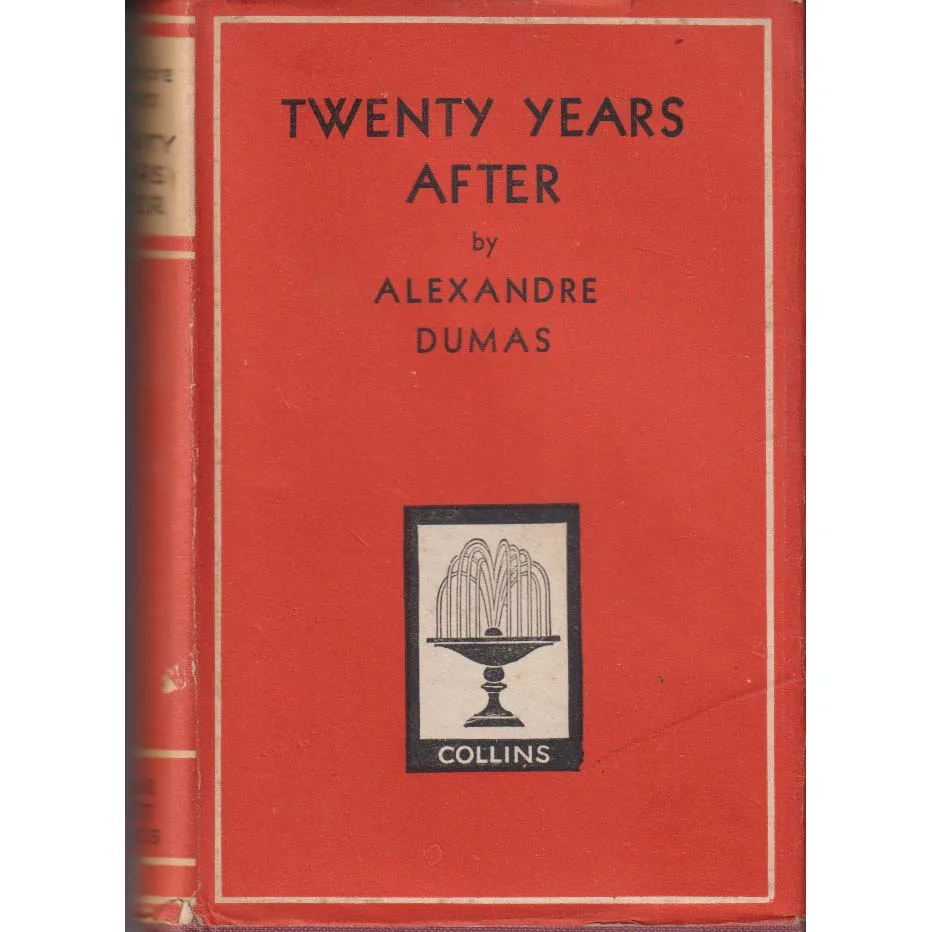
Publisher: Collins Pocket Classics
Format: Hardback
ISBN: none
Twenty Years After (c.1930) by Alexandre Dumas — Collins Pocket Classics
ISBN: None (because in the old days your “metadata” was “it’s the one with the title on it”)
Condition: Good (as sold by Crappy Old Books, whose stock specialises in books that have survived drama)
If The Three Musketeers is the sound of youth kicking down doors with style, Twenty Years After is the sound of adulthood realising the doors now come with paperwork, consequences, and a faint sense of regret. Dumas returns to his most famously swaggering quartet and asks a beautifully cruel question: What happens when the adventures stop being new… but the world keeps demanding them anyway?
Because yes—twenty years have passed. The swords are still sharp, but the friendships have acquired history. The ideals are still there, but they’ve been knocked about a bit. And France, being France, has not settled down and taken up knitting. Instead, it’s in the thick of political turmoil, plots, shifting loyalties, and the kind of civic chaos that makes you nostalgic for simpler times, like when your biggest problem was finding a decent tavern and not getting arrested for being charming.
D’Artagnan is still ambitious. Athos is still quietly magnificent. Porthos is still gloriously enthusiastic. Aramis is still… Aramis. But now the fun comes with melancholy, the jokes have shadows, and the stakes feel sharper because everyone involved knows exactly what it costs to win. It’s swashbuckling with a hangover. It’s friendship, honour, and betrayal—served not as a sparkling debut but as an encore where you can hear the audience holding its breath.
Dumas, of course, remains Dumas: plots within plots, rescues within rescues, coincidences that would make a modern editor cry, and dialogue that practically leaps off the page, rapier-first. He writes with such momentum you don’t read so much as get swept along, periodically coming up for air to say, “Hang on—did that just happen?” Yes. It did. And it will again in about three pages.
Now add the special charm of this edition: Collins Pocket Classics, around c.1930—a proper little time capsule of a book. Pocket-sized, portable, and faintly miraculous in its optimism that you might casually carry Dumas around like a snack. This is the sort of volume that feels like it has been read in trains, trenches, boarding houses, and rainy afternoons when entertainment meant ink and imagination. It’s compact, sturdy, and slightly dignified in that vintage way: the book equivalent of a well-worn overcoat that’s seen things.
Condition is Good, which in Crappy Old Books terms means it’s still entirely fit for purpose: readable, holding together, and only lightly marked by its travels through time and other people’s hands. Expect the usual honest signs of age—maybe a bit of wear, perhaps a little toning, the mild patina of a book that has been taken seriously. Perfect, really, for a story about time passing and the glamour of survival.
Buy it if you like:
-
classic adventure with brains, bite, and a touch of gloom
-
heroes who are still heroic, but now complicated about it
-
political intrigue that comes with swordplay (as all politics should)
-
vintage editions that feel like they’ve already had their own adventures
Twenty Years After is your invitation back into the musketeers’ world—only now it’s deeper, darker, and oddly more human. The swagger is still there, but it’s wearing a slightly older face. And honestly? It suits them.
Keep browsing: See more Literary Classics books Other books by Alexandre Dumas
